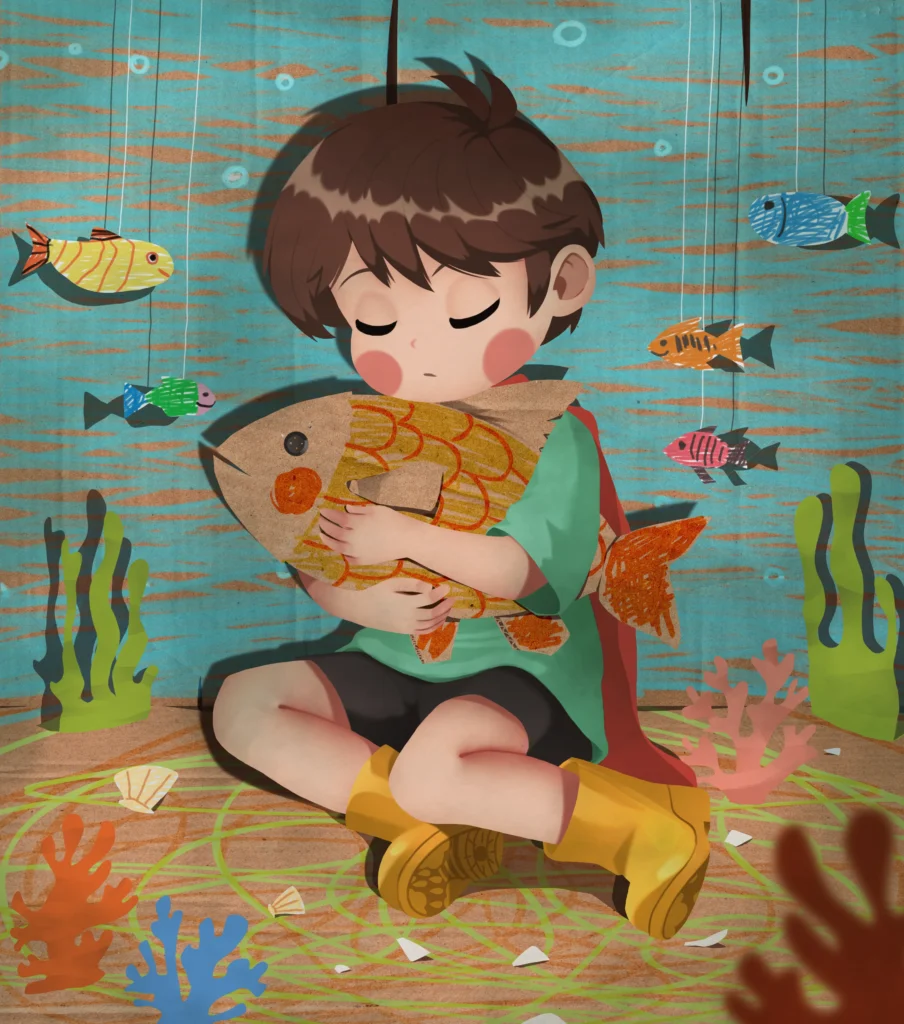
Evocative children art focuses on emotional presence rather than narrative clarity. It does not aim to entertain, teach, or idealize childhood. Instead, it reflects inner emotional states that exist quietly within a child’s world.
At its core, this type of art is about vulnerability. Children experience emotions with intensity but often without language. Evocative art translates those unspoken feelings into visual form. Fear, uncertainty, curiosity, loneliness, hope, and resilience are expressed through posture, environment, and atmosphere rather than action.
Unlike traditional children illustrations, evocative children art avoids exaggeration and performance. The child is not acting for the viewer. The moment feels paused, as if observed rather than staged. This stillness allows viewers to project their own memories and emotions onto the image.
Symbolism plays a central role. Objects and spaces carry emotional meaning. A small room can feel overwhelming. Transparent walls can suggest exposure. Growing plants can represent quiet endurance. These elements work together to communicate emotional states without explanation.
Evocative children art also resists simple resolution. There is rarely a clear problem or solution. The child may not be in danger, yet does not feel safe. The scene may appear calm, yet carry tension. This ambiguity is intentional. It mirrors how emotions are often felt rather than understood, especially in childhood.
Another defining aspect is emotional honesty. This art does not protect the viewer from discomfort, but it also does not exploit it. The goal is recognition rather than shock. When successful, viewers feel something familiar without being told what to feel.
This form of art often connects more strongly with adults than expected. While the subject is a child, the emotional response comes from memory. Adults recognize moments of their own childhood within the work. The art becomes a bridge between past and present emotional experiences.
Evocative children art is not about telling a story with words. It is about holding a moment long enough for the viewer to feel it. It acknowledges that childhood is not only joy or innocence, but also quiet complexity.
In doing so, it expands how childhood can be represented in art. Not as a performance of happiness, but as a genuine emotional landscape that deserves to be seen with care.
At its core, this type of art is about vulnerability. Children experience emotions with intensity but often without language. Evocative art translates those unspoken feelings into visual form. Fear, uncertainty, curiosity, loneliness, hope, and resilience are expressed through posture, environment, and atmosphere rather than action.
Unlike traditional children illustrations, evocative children art avoids exaggeration and performance. The child is not acting for the viewer. The moment feels paused, as if observed rather than staged. This stillness allows viewers to project their own memories and emotions onto the image.
Symbolism plays a central role. Objects and spaces carry emotional meaning. A small room can feel overwhelming. Transparent walls can suggest exposure. Growing plants can represent quiet endurance. These elements work together to communicate emotional states without explanation.
Evocative children art also resists simple resolution. There is rarely a clear problem or solution. The child may not be in danger, yet does not feel safe. The scene may appear calm, yet carry tension. This ambiguity is intentional. It mirrors how emotions are often felt rather than understood, especially in childhood.
Another defining aspect is emotional honesty. This art does not protect the viewer from discomfort, but it also does not exploit it. The goal is recognition rather than shock. When successful, viewers feel something familiar without being told what to feel.
This form of art often connects more strongly with adults than expected. While the subject is a child, the emotional response comes from memory. Adults recognize moments of their own childhood within the work. The art becomes a bridge between past and present emotional experiences.
Evocative children art is not about telling a story with words. It is about holding a moment long enough for the viewer to feel it. It acknowledges that childhood is not only joy or innocence, but also quiet complexity.
In doing so, it expands how childhood can be represented in art. Not as a performance of happiness, but as a genuine emotional landscape that deserves to be seen with care.